



Rights in Russia
Voices from Russia's human rights community [in Russian and sometimes English]


ABOUT THIS PODCAST
Discussing human rights in Russia [in Russian and sometimes English].
Episodes
170
Type
Hosted
Language
English
Started
11 Jan, 2020
Created by
Rights in Russia
Explicit
No
Podcast tags
Latest Episodes
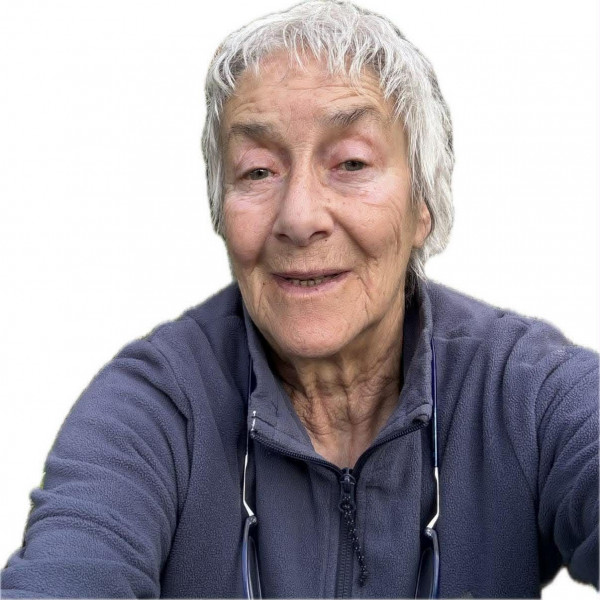
Podcast Then & Now #42: Teresa Cherfas in conversation with Masha Slonim
Rights in Russia
Pictured: Masha Slonim
28 May 2026
Welcome to the 42nd edition of the Russian-language podcast Then & Now with me, Teresa Cherfas
I’m one of thousands of Facebook followers of Russian-British journalist Masha Slonim. Masha and I met forty years ago when we were colleagues at the BBC Russian Service.
Scrolling through Facebook a couple of weeks ago, I unexpectedly discovered that Masha’s cousin, Nina Litvinova, had died. It was May 13. The next day, May 14, Masha posted again:
“Today, RIA Novosti reported, citing law enforcement sources, that our sister Nina Litvinova had taken her own life. In other words, the cops leaked this information. They also wrote that Nina had left a handwritten suicide note.”
Masha then published excerpts from Nina’s suicide note, explaining: “Of course, no one—neither RIA nor Gazeta.ru, which reported this—will publish the note…’
The note speaks of a feeling of helplessness, of the number of people in prison for not supporting the war against Ukraine, of how life had become unbearable. Of her shame that she had given up, surrendered.
Nina LitvinovaOn the evening of 12 May 2026, at the age of 80, Nina, a human rights activist and academic, was found unconscious beneath the windows of her apartment building on 3rd Frunzenskaya Street in Moscow. Clearly, Nina had thrown herself out of the window.
I found the story haunting, and not just because I could imagine where and how it happened—I had lived on 3rd Frunzenskaya Street when I worked in Moscow in 1998.
I wanted to understand why Nina Litvinova’s act had had such an effect not only on me, but on so many others—both those who knew her and those who didn’t—in Putin’s Russia and beyond.
I asked Masha to talk about her sister and the significance of her decision to take her own life.
QUESTIONS- Masha, how did you find out that Nina had died? Did you understand straightaway what had happened?
- You published excerpts from the letter Nina left her family and loved ones. What do you make of her final note?
- You grew up with Nina in Moscow—tell us about your family. Your grandfather was Maxim Litvinov, Stalin’s People’s Commissar for Foreign Affairs from 1930 to 1939. How did you understand his role in the history of the Soviet Union?
- Nina’s older brother was Pavel Litvinov, who on August 25, 1968, took part in the “Demonstration of Eight” on Red Square, protesting the Soviet invasion of Czechoslovakia. Did his actions influence the direction of Nina’s future life?
- Pavel Litvinov left for America; you and your sister Vera also left, first to America and then to England. Why did Nina stay in Russia? What kept her there?
- What did Nina do in her professional life?
- Many people came to the wake for Nina in Moscow. What was your impression of it?
- You wrote on Facebook that by publishing excerpts from Nina’s last note, you had taken the decision to reveal the real cause of her death and you accused Putin of Nina’s murder. What exactly did you mean?
- Do you remember Irina Slavina, who died in 2020 after setting herself on fire in Nizhny Novgorod? She blamed the Russian Federation for her death…. And then there was Alexander Okunev in Kaliningrad who also committed an act of self-immolation on the third anniversary of the full-scale invasion of Ukraine—his death was hushed up and only came to light a little over a year later. How many more martyrs are needed for Russia to rid itself of its illusions about its president?
- How would you put into a few words your feelings about Nina and what the nature of her death symbolises?
02 Jun, 2026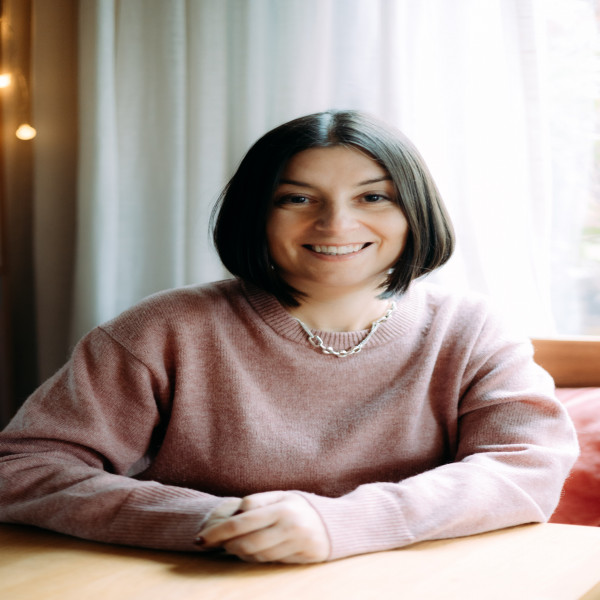
Podcast Then & Now #41: Teresa Cherfas in conversation with Ksenia Luchenko
Rights in Russia
8 May 2026
by Teresa Cherfas
Welcome to the 41st edition of the Russian-language podcast Then & Now with me, Teresa Cherfas.
Ksenia Luchenko (pictured above) is the author of the book Благими Намерениями – Русская Церковь и Власть от Горбачева до Путина [‘With Good Intentions: The Russian Church and State from Gorbachev to Putin’] for which she received the ‘Prosvetitel’ award (Enlightener Prize) in 2025. That same year, her name was added to the list of ‘foreign agents’ and, in March this year, she was sentenced in absentia in the Russian Federation to eight years’ imprisonment under the ‘military fakes’ law. Ksenia left Russia in April 2022. Prior to this, she had worked extensively as a journalist and scholar in the field of church affairs and media.
This podcast was recorded on 7 May 2026
Questions:- What prompted you to leave Russia so soon after the full-scale invasion of Ukraine?
- Your book With Good Intentions was published last year. Why did you choose that title?
- In 2014, the annexation of Crimea took place, and shortly afterwards, the so-called separatist war in the Donbas region of Ukraine began. Did this mark a turning-point in relations between the Orthodox Church and Putin’s Kremlin, a turn that led to the ‘road to hell’?
- In the summer of 2021, Putin wrote a lengthy treatise on his interpretation of Russian history and the place of the ‘Russian world’ in contemporary politics.. Could you comment on the role of the Russian Orthodox Church in shaping his worldview?
- The Russian Orthodox Church is currently one of the main ideologues of the war with Ukraine, calling the war a holy war and glorifying death on the battlefield. In this context, what is a ‘holy war’ and what are the criteria for defining it?
- And what about relations between the Russian Orthodox Church and the Ukrainian Orthodox Church?
- An important event during Gorbachev’s policies of glasnost and perestroika was the celebration of the millennium of the Russian Orthodox Church in 1988. In hindsight, does it seem surprising that it was celebrated so widely in a country that was still atheist – the USSR?
- Patriarch Aleksy, who led the Russian Orthodox Church during that period, was succeeded by Kirill, who became patriarch in 2009. How did their characters differ? What role did this play in the Church’s subsequent relations with the state?
- It is said that the only institutions that did not undergo reform following the collapse of the Soviet Union were the Russian Orthodox Church and the KGB. Is this true?
- Following the collapse of the Soviet Union, did the Russian people welcome the revival of the Russian Orthodox Church? And to what extent has the revival of the Orthodox Church been related to the development of Russian nationalism?
- For several years now, under Putin’s leadership, Russia seems to want to be seen as a bastion of so-called “traditional values.” These values have been enshrined in laws criminalising homosexuality and declaring the ‘dissemination of LGBT propaganda’ a criminal offence. What is the role of the Russian Orthodox Church in this legislation? How is its role in this sphere evolving today in connection with the war in Ukraine?
- Today, Putin’s “holy war” against Ukraine seems to have been a precursor to the ‘holy wars’ of other global leaders – this is how Israel’s wars in Gaza and Lebanon are justified, this is how President Trump presents his war against Iran, and this is the case with the jihads of the Ayatollah and Hamas. Does this surprise you in the 21st century?
- Pope Leo XIV sharply criticised President Trump for his bombing of the civilian population in Iran, citing the Bible and God’s commandments. How did the Russian Orthodox Church react?– And Putin?
- Are there dissidents among Russian Orthodox priests? And if so, what is the situation with them?
14 May, 2026![Podcast Then & Now #40 [Part 2]: Teresa Cherfas in conversation with Tanya from Mariupol](https://s3.amazonaws.com/podcasts-image-uploads/podcast-then-now-40-part-2-teresa-cherfas-in-conversation-with-tanya-from-mariupol-600x600.png)
Podcast Then & Now #40 [Part 2]: Teresa Cherfas in conversation with Tanya from Mariupol
Rights in Russia
20 March 2026
by Teresa Cherfas
Welcome to the second part of the 40th edition of the Russian-language podcast Then & Now with me, Teresa Cherfas
Today, we continue Tanya’s story from Mariupol. In the first part, we left her with her granddaughter in Krasnodar. Many moves lay ahead before they finally found a more permanent refuge in England.
This podcast was recorded on 13 March 2026
My questions:- In the last episode, you told us how you and your granddaughter reached Krasnodar. How did you leave Russia? And how did you end up in England?
- Do you keep in touch with friends and neighbours who still live in Mariupol?
- Do you dream of ever returning home?
- What kind of future would you like to see for Ukraine?
24 Mar, 2026
Disclaimer
The podcast and artwork embedded on this page are from Rights in Russia, which is the property of its owner and not affiliated with or endorsed by Podcasts.com, Inc.

Podcast Hosting
Podcasts.com is the internet's leading podcast search engine, hosting provider, and podcaster marketing solution.
Find Out More