



The Divorce Collective
Join Head of Family Law at Collective Family Law Group and Family Dispute Resolution Practitioner, Dannielle Young and listen in to the 6-minute podcasts as she dives into strategies, legal insights and tips to help you move through your separation and divorce sooner.


ABOUT THIS PODCAST
Tune in as Head of Family Law at Collective Family Law Group and Family Dispute Resolution Practitioner, Dannielle Young guides you through your separation and divorce by sharing strategies, legal insights and tips to help you move on faster. Having helped thousands of people through divorce and also drawing on her own experiences being in the family law and relationship space for almost 2 decades, Dannielle shares her expertise in 6-minute, easy to listen to bursts to help you navigate separation. Dannielle is the Head of Family Law at Collective Family Law Group which is a Family Law Practice based in Australia that focuses on making this transition as easy as possible for people going through the various stages of separation and divorce. The team is group of passionate and committed family lawyers helping clients find effective and efficient solutions to resolve their family law matters, and helping them move to a brighter future. These services include full family law services, fixed fee services and online solutions with their new program Resolve. Dannielle also is the Director of Dannielle Young Mediations where she expands on her passion to keep separating couples and families out of the Court system through Mediation. Dannielle is a registered Family Dispute Resolution Practitioner and operates her Mediation practice outside of her leadership of the team at Collective Family Law Group. Tune on into the weekly podcast or head over to collectivefamilylaw.com.au or dymediation.com.au to find helpful resources.
Episodes
123
Type
Hosted
Language
English
Started
22 Dec, 2020
Created by
Hayder Shkara
Explicit
No
Podcast tags
Latest Episodes
Paws, Property, and the Law: Pets in Separation Just Got Serious (Ep. 124)
Hayder Shkara
In this episode of The Divorce Collective, host Dannielle Young explores one of the most emotionally complex and increasingly common post-separation disputes: who keeps the pet?
With recent changes to the Family Law Act (effective 10 June 2025), pets are no longer treated as mere property in Australian family law. Instead, courts are now required to consider a pet’s emotional wellbeing, their relationship with family members, and even their role in cases involving family and domestic violence.
Drawing on real-world examples and her legal and mediation experience, Dannielle unpacks what this means for separating couples, how courts may handle these disputes, and why we’re entering uncharted legal territory when it comes to our furry family members.
Key Points Discussed:
What’s changed under the Family Law Act?
Companion animals are now recognised as more than just property. Courts must now take into account who has been the primary caregiver, the pet’s emotional bond with family members (including children), and their comfort and welfare when determining who should retain care.
Real-World Example:
Dannielle Young shares a live case involving a couple navigating shared care of their dogs, where the situation has escalated into discussions involving:
-Pet behaviour experts
-Emotional attachment assessments
-Integration plans for introducing a new partner’s pet
This example illustrates just how seriously pet-related issues are now being taken in family law and how complex things can get.
Why does this matter for separating couples?
Pets are often caught in the emotional crossfire of separation. These changes mean separating parties need to start treating pet care arrangements with the same seriousness as other parenting or property matters. Mediation and early communication are key.
Whether you're separating or already co-parenting a pet, this episode will give you valuable insight into how the law is evolving to reflect the reality of pets as family not furniture.
We’d love to hear from you. Are you dealing with a pet custody challenge? Have these changes impacted your separation plans?
21 Jul, 2025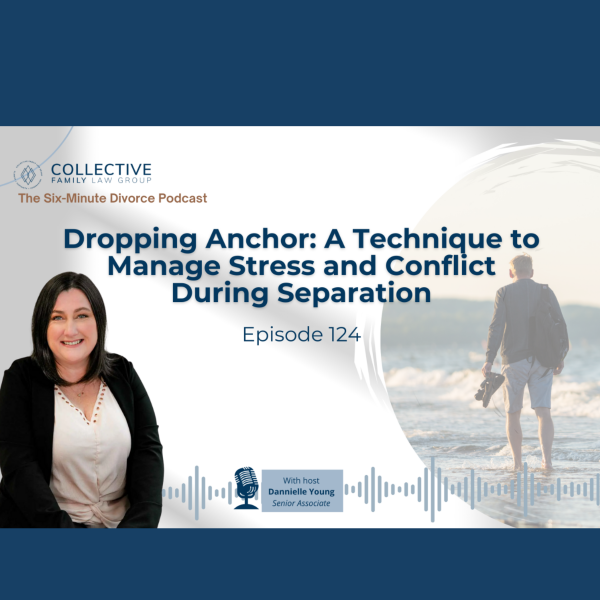
Using the Dropping Anchor Technique to Manage Stress and Conflict During Separation (Ep. 123)
Hayder Shkara
In this episode of The Divorce Collective, host Dannielle Young follows her theme of stress and conflict management strategies to adopt during separation. She introduces the Dropping Anchor Technique, a mindfulness-based grounding exercise rooted in Acceptance and Commitment Therapy (ACT). By exploring this technique, Dannielle helps individuals to stay calm and collected during the emotionally overwhelming moments of separation. This practical, three-step will call you to feel empowered in regaining control of your emotions and behaviours when confronted with challenges.
Key Points Discussed:
What is the Dropping Anchor Technique?
Like an anchor in stormy waters, this grounding exercise aims to help manage emotional storms during high-stress situations by preventing emotional drifts and impulsive reactions.
Three-Step Process:
1. Acknowledge your thoughts and emotions: Notice your feelings (e.g., anger, frustration) without judgment.
2. Connect with your body: Use physical grounding techniques like pressing your feet into the floor or taking deep breaths.
3. Engage with the present moment: Focus on your surroundings to anchor yourself in the present.
Why is it useful in separation?
It is no question that, with separation, comes inherently emotional, unexpected triggers that can escalate conflicts. Often, it can be easy to make decisions or behaviours that we will later regret.
By slowing down these emotional responses, you can grant yourself the power to step away from the situation and return with a calm, solution-focused mindset in any situation.
Whether that be parenting, financial settlements, or legal proceedings, you can regain control to better support the wellbeing of those involved, including yourself, and your children.
Example: You receive a message from your ex-partner
Without Dropping Anchor: You immediately fire off an angry response, escalating the present conflict.
With Dropping Anchor: You take the time to pause and acknowledge your emotions. You are upset by the message. You start to ground yourself by placing your feet on the floor, pressing your hands together and focusing on the pressure between your palms. You take deep breaths and bring yourself back to this present moment, acknowledging your current environment. The emotions have subsided a bit and you are able to think calmly. You respond with a neutral message.
Which approach do you think was better?
We call you to try this technique yourself and tell us how you went! Did you find that adopting this strategy led to a better outcome?
Disclaimer: This podcast is for informational purposes only and does not constitute legal advice. For personalised guidance, please consult with a family lawyer at Collective Family Law Group.
If this episode resonates with you, be sure to subscribe, leave a review, and share it with someone who might need support during a separation.
Connect with Collective Family Law Group:
Instagram: @Collective_Family_Law
Facebook: Collective Family Law Group
LinkedIn: Collective Family Law Group
Website: collectivefamilylaw.com.au
Phone: (07) 5574 0971
22 May, 2025Using the BIFF Technique to Reduce Conflict During Separation (Ep. 122)
Hayder Shkara
Separation can be an emotionally charged process, often leading to misunderstandings and conflict. In today’s episode of The Divorce Collective, Dannielle Young explores the BIFF Technique—Brief, Informative, Friendly, and Firm—a practical communication strategy to minimise conflict during separation. Whether you're navigating co-parenting, legal discussions, or personal exchanges, BIFF offers a structured approach to keep conversations calm and productive.
Key Points Discussed
What is BIFF?
- Brief: Keep communication short, clear, and to the point.
- Informative: Stick to facts and provide only necessary information. Avoid opinions or emotions.
- Friendly: Use a neutral, respectful tone.
- Firm: Set boundaries without being aggressive or confrontational.
Why BIFF Works in Separation
- Reduces emotional escalation.
- Encourages productive dialogue, especially in co-parenting or legal discussions.
- Helps maintain boundaries while staying respectful.
Try using the BIFF Technique in your next challenging conversation and share your experience with us. Follow us on The Divorce Collective for more tips on navigating separation with less stress.
Disclaimer: This podcast is for informational purposes only and does not constitute legal advice. For personalised guidance, please consult with a family lawyer at Collective Family Law Group.
? If this episode resonates with you, be sure to subscribe, leave a review, and share it with someone who might need support during a separation.
Connect with Collective Family Law Group:
- Instagram: @Collective_Family_Law
- Facebook: Collective Family Law Group
- LinkedIn: Collective Family Law Group
- Website: collectivefamilylaw.com.au
- Phone: (07) 5574 0971
16 May, 2025Navigating Separation with Children with Neurodivergent Needs (EP. 121)
Hayder Shkara
Join Senior Associate and Family Dispute Resolution Practitioner Dannielle Young in this episode of the Divorce Collective Podcast as she shares insight on navigating separation with children with neurodivergent needs.
Separation is challenging and the complexities multiply when neurodivergent children are involved in the process. Neurodivergent children thrive on structure, consistency and credibility. It is essential to adapt thoughtful strategies that prioritise children’s emotional wellbeing.
Here are some useful strategies you can implement, which are further discussed in today’s episode:
- Maintain consistency and routine
- Communicate openly and honestly
- Develop transition plan
- Foster positive co-parenting and collaboration
- Seek professional support
- Address sensory needs (if there are any) in both homes
- Encourage strong parent child bonds
- Stay engaged in your children’s education
- Prioritise your own parental self care
- Stay positive and stay patient
With the right strategies and support, neurodivergent children can thrive despite the changes.
WIth structured planning, clear communication, and commitment to that consistency, parents can create a stable and supportive environment for children with neurodivergent needs.
Disclaimer: This podcast is for informational purposes only and does not constitute legal advice. For personalised guidance, please consult with a family lawyer at Collective Family Law Group.
Connect with Collective Family Law Group:
- Instagram: @Collective_Family_Law
- Facebook: Collective Family Law Group
- LinkedIn: Collective Family Law Group
- Website: collectivefamilylaw.com.au
- Phone: (07) 5574 0971
03 Apr, 2025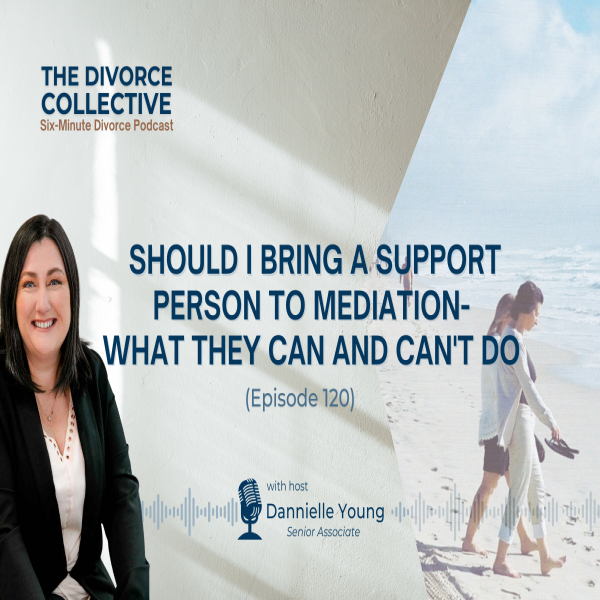
Should I Bring a Support Person to Mediation - What They Can and Can't Do (EP. 120)
Hayder Shkara
In this episode of The Divorce Collective Podcast, Dannielle Young, Senior Associate at Collective Family Law Group and an experienced Family Dispute Resolution Practitioner, sheds light on the often-overlooked topic of support people in family law mediation.
Mediation is a highly effective method for resolving family law disputes, including parenting arrangements and property settlements, but it can be overwhelming. Support people play a vital role in offering emotional stability while highlighting their limitations to ensure a fair and productive mediation environment.
What you’ll learn in this episode:- Why mediation is an effective alternative to court.
- The emotional benefits of having a support person in the room.
- Clear guidelines on what support people can and cannot do.
- How to choose the right support person for your mediation.
- Confidentiality requirements and their importance during mediation.
If you’re going through a separation or divorce, this episode provides valuable insights into making your mediation process smoother and less stressful. Listen in for family law mediation tips on involvement of a support person with your lawyer or mediator.
Tune into this episode for expert advice, and let us help you move forward with clarity and confidence.
Disclaimer:
This podcast is for informational purposes only and does not constitute legal advice. Please consult a qualified legal professional for tailored guidance specific to your circumstances. Contact Collective Family Law Group for expert family law mediation tips.
22 Nov, 2024
Disclaimer
The podcast and artwork embedded on this page are from Hayder Shkara, which is the property of its owner and not affiliated with or endorsed by Podcasts.com, Inc.

Podcast Hosting
Podcasts.com is the internet's leading podcast search engine, hosting provider, and podcaster marketing solution.
Find Out More